NB : Baca dulu sampai selesai baru ambil kesimpulan
Sebagai manusia, wajar jika kita menangis, baik pria maupun
wanita. Apalagi, menangis banyak manfaatnya. Menurut penelitian, perempuan menangis sekitar 47 kali dalam setahun, sedangkan laki-laki hanya tujuh kali. Tingginya hormon prolaktin dalam tubuh wanita diduga jadi penyebabnya.Bila ada yang masih takut disebut cengeng karena
menangis, sebaiknya simak manfaat dari mencucurkan air mata berikut ini.
Ternyata menangis itu bermanfaat untuk mengatasi berbagai penyakit
berdasarkan beberapa fakta berikut:
1. menangis merupakan cara alami untuk mengusir unsur-unsur yang merugikan dan berbahaya dari dalam tubuh, yang dikeluarkan pada saat
seseorang sedang mengalami kesedihan atau kekhawatiran.
2. “Menangis adalah pelepasan emosi yang paling tepat saat kita tak bisa
mengungkapkannya lewat kata-kata,” kata Dr Simon Moore,psikolog dari London Metropolitan University. Menurut Profesor William Frey,ahli tangis dari AS, airmata yang dikeluarkan saat kita sedang emosional mengandung hormon endorphin atau stres sehingga bisa membuat perasaan lebih plong. Menangis juga diketahui bisa menurunkan tekanan
darah dan denyut nadi.
3. Sebuah penelitian yang dilakukan para ahli di Amerika Serikat menyebutkan, 9 dari10 orang mengaku merasa lebih lega setelah menangis.Bahkan, para ahli juga percaya kalau menangis bisa menyembuhkan sakit dan meningkatkan kadar hormon adrenalin.
4. Kajian ilmiah mengungkapkan bahwa perempuan lebih banyak menangis empat kali lipat dari pada laki-laki. Karena mereka mempunyai kelenjar-kelenjar air mata yang bentuknya lebih besar dari pada kelenjar laki-laki.Para ilmuwan mensinyalir bahwa inilah yang menyebabkan perempuan mampu hidup lebih lama dari pada laki-laki. Karena perempuan dapat menetralisir racun dari tubuhnya melalui air mata.
6. Air mata memiliki kemampuan handal membunuh microba yang sangat berbahaya karena mengandung unsur lizorium yang beracun.
7. Para peneliti menemukan bahwa tangisan yang paling pertama dilakukan oleh bayi ternyata bukan yang terjadi diruangan bersalin,namun saat ia berada dalam kandungan ibunya.
8. Para ilmuwan malakukan analisis mengenai air mata,dan ternyata mereka mendapatkan bahwa air mata itu mengandung 25persen dari protein dan sebagian dari metal, khususnya magnesium yang sarat dengan sejumlah racun yang bisa dibuang oleh seseorang dengan cara menangis dan mengeluarkan air mata.
9. Dr. M. ‘Abdul Lathif Balthiyyah, seorang dokter spesialis mata, berpendapat bahwa air mata itu mempunyai banyak faedah. air mata akan membantu elastisitas gerakan kelopak mata bagian atas dan bawah. air mata akan menjaga mata sebagai sebuah media untuk membersihkannya secara terus-menerus, sehingga dengan menangis akan menjaga mata dari kekeringan.
10. Di samping itu, airmata juga membantu mengusir setiap unsur yang bisa mengganggu mata,seperti cabe, asap,atau bahkan benda-benda yang padat seperti debu. Melalui kelenjar air mata,menagis juga bekerja
untuk mengucurkan air mata dan mengusir benda-benda asing dari mata, sehingga mata bersih. Air mata juga bekerja untuk mentrasparankan
kornea dan menjaga agar tidak kering. Ini merupakan faktor-faktor yang membantu kejelasan pandangan dan juga menjaga kekuatan dan akurasi
pengelihatan.
Dan masih banyak manfaat lain yang mungkin masihbelum kita ketahui. Siapa bilang menangis tak ada gunanya? Kelamaan menangis memang bisa bikin mata merah dan bengkak. Tapi jangan salah, menangis dan mengeluarkan air mata ternyata bisa jadi obat ajaib yang berguna bagi kesehatan tubuh dan pikiran. Apa saja?
Dikutip dari Beliefnet, ini dia 7 keajaiban yang bisa Anda dapatkan setelah menangis dan berair mata.
1. Membantu penglihatan
Air mata ternyata membantu penglihatan seseorang, jadi bukan hanya mata itu sendiri. Cairan yang keluar dari mata dapat mencegah dehidrasi pada membran mata yang bisa membuat penglihatan menjadi kabur.
2. Membunuh bakteri
Tak perlu obat tetes mata, cukup air mata yang berfungsi sebagai antibakteri alami. Di dalam air mata terkandung cairan yang disebut dengan lisozom yang dapat membunuh sekitar 90-95 persen bakteri-bakteri yang tertinggal dari keyboard komputer, pegangan tangga, bersin dan tempat-tempat yang mengandung bakteri, hanya dalam 5 menit.
3. Meningkatkan mood
Seseorang yang menangis bisa menurunkan level depresi karena dengan menangis, mood seseorang akan terangkat kembali. Air mata yang dihasilkan dari tipe menangis karena emosi mengandung 24 persen protein albumin yang berguna dalam meregulasi sistem metabolisme tubuh dibanding air mata yang dihasilkan dari iritasi mata.
4. Mengeluarkan racun
Seorang ahli biokimia, William Frey telah melakukan beberapa studi tentang air mata dan menemukan bahwa air mata yang keluar dari hasil menangis karena emosional ternyata mengandung racun.
Tapi jangan salah, keluarnya air mata yang beracun itu menandakan bahwa ia membawa racun dari dalam tubuh dan mengeluarkannya lewat mata.
5. Mengurangi stres
Bagaimana menangis bisa mengurangi stres? Air mata ternyata juga mengeluarkan hormon stres yang terdapat dalam tubuh yaitu endorphin leucine-enkaphalin dan prolactin.
Selain menurunkan level stres, air mata juga membantu melawan penyakit-penyakit yang disebabkan oleh stres seperti tekanan darah tinggi.
6. Membangun komunitas
Selain baik untuk kesehatan fisik, menangis juga bisa membantu seseorang membangun sebuah komunitas. Biasanya seseorang menangis setelah menceritakan masalahnya di depan teman-temannya atau seseorang yang bisa memberikan dukungan, dan hal ini bisa meningkatkan kemampuan berkomunikasi dan juga bersosialisasi.
7. Melegakan perasaan
Semua orang rasanya merasa demikian. Meskipun Anda didera berbagai macam masalah dan cobaan, namun setelah menangis biasanya akan muncul perasaan lega.
Setelah menangis, sistem limbik, otak dan jantung akan menjadi lancar, dan hal itu membuat seseorang merasa lebih baik dan lega. Keluarkanlah masalah di pikiranmu lewat menangis, jangan dipendam karena Anda bisa menangis meledak-ledak.
Jadi, tidak apa-apa kalau Anda menangis sesekali.
Rabu, 10 Maret 2010

Selasa, 09 Maret 2010
Culture of The United Kindom
why I took the theme of the UK culture?
because I was interested in UK culture 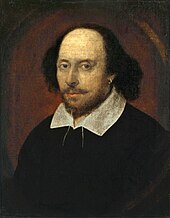

Print


because I was interested in UK culture
Culture
The culture of the United Kingdom—British culture— may be described as informed by its history as a developed island country, major power, and also as a political union of four countries, with each preserving elements of distinctive traditions, customs and symbolism. As a result of the British Empire, British influence can be observed in the language, culture and legal systems of many of its former colonies such as Canada, Australia, India, and the United States.
Cinema
Main article: Cinema of the United Kingdom
The United Kingdom has been influential in the development of cinema, with the Ealing Studios claiming to be the oldest studios in the world. Despite a history of important and successful productions, the industry is characterised by an ongoing debate about its identity, and the influences of American and European cinema. Particularly between British and American film, many films are often co-produced or share actors with many British actors now featuring regularly in Hollywood films. The BFI Top 100 British films is a poll conducted by the British Film Institute which ranks what they consider to be the 100 greatest British films of all time.
Literature
Main article: British literature

'British literature' refers to literature associated with the United Kingdom, the Isle of Man and the Channel Islands as well as to literature from England, Wales and Scotland prior to the formation of the United Kingdom. Most British literature is in the English language. The UK publishes some 206,000 books each year, making it the largest publisher of books in the world.
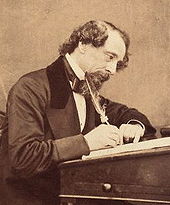
The English playwright and poet William Shakespeare is widely regarded as the greatest dramatist of all time. Among the earliest English writers are Geoffrey Chaucer (14th century), Thomas Malory (15th century), Sir Thomas More (16th century), and John Milton (17th century). In the 18th century, Samuel Richardson is often credited with inventing the modern novel. In the 19th century, there followed further innovation by Jane Austen, the gothic novelist Mary Shelley, children's writer Lewis Carroll, the Brontë sisters, the social campaigner Charles Dickens, the naturalist Thomas Hardy, the visionary poet William Blake and romantic poet William Wordsworth.
Twentieth century writers include the science fiction novelist H. G. Wells, writers of children's classics Rudyard Kipling, A. A. Milne, the controversial D. H. Lawrence, the modernist Virginia Woolf, the satirist Evelyn Waugh, the prophetic novelist George Orwell, the popular novelist Graham Greene, crime novelist Agatha Christie, and the poets Ted Hughes and John Betjeman. Most recently, the children's fantasy Harry Potter series by J. K. Rowling has recalled the popularity of J. R. R. Tolkien and C. S. Lewis.

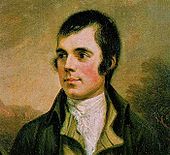
Scotland's contribution includes the detective writer Arthur Conan Doyle, romantic literature by Sir Walter Scott, children's writer J. M. Barrie and the epic adventures of Robert Louis Stevenson. It has also produced the celebrated poet Robert Burns, as well as William McGonagall, regarded by many as one of the world's worst. More recently, the modernist and nationalist Hugh MacDiarmid and Neil M. Gunn contributed to the Scottish Renaissance. A more grim outlook is found in Ian Rankin's stories and the psychological horror-comedy of Iain Banks. Scotland's capital, Edinburgh, is UNESCO's first worldwide City of Literature.

The oldest known poem from the area now known as Scotland, Y Gododdin, was composed in Cumbric or Old Welsh in the late sixth century and contains the earliest known reference to King Arthur. A great role in the development of Arthurian legend, and early development of British history, was played by Geoffrey of Monmouth. The greatest Welsh poet of all time is generally held to be Dafydd ap Gwilym. Owing to the dominance of the Welsh language in Wales until the late nineteenth century, the majority of Welsh literature was in Welsh, and much of the prose was religious in character; Daniel Owen is credited as the first Welsh-language novelist, publishing Rhys Lewis in 1885. In the twentieth century, the poets R. S. Thomas and Dylan Thomas became well known for their English-language poetry, Richard Llewellyn and children's works by Roald Dahl. Modern writers in Welsh include Kate Roberts.
Authors from other nationalities, particularly from Ireland, or from Commonwealth countries, have lived and worked in the UK. Significant examples through the centuries include Jonathan Swift, Oscar Wilde, Bram Stoker, George Bernard Shaw, Joseph Conrad, T. S. Eliot and Ezra Pound, and more recently British authors born abroad such as Kazuo Ishiguro and Sir Salman Rushdie.
In theatre, Shakespeare's contemporaries Christopher Marlowe and Ben Jonson added depth. More recently Alan Ayckbourn, Harold Pinter, Michael Frayn, Tom Stoppard and David Edgar have combined elements of surrealism, realism and radicalism.
Media
Main article: Media of the United Kingdom
The prominence of the English language gives the UK media a widespread international dimension.
Broadcasting
Main article: Television in the United Kingdom

There are five major nationwide television channels in the UK: BBC One, BBC Two, ITV, Channel 4 and Five—currently transmitted by analogue terrestrial, free-to-air signals with the latter three channels funded by commercial advertising. In Wales, S4C the Welsh Fourth Channel replaces Channel 4, carrying Welsh language programmes at peak times. It also transmits Channel 4 programmes at other times.
The BBC is the UK's publicly funded radio, television and internet broadcasting corporation, and is the oldest and largest broadcaster in the world. It operates several television channels and radio stations in both the UK and abroad. The BBC's international television news service, BBC World News, is broadcast throughout the world and the BBC World Service radio network is broadcast in thirty-three languages globally, as well as services in Welsh on BBC Radio Cymru and programmes in Gaelic on BBC Radio nan Gàidheal in Scotland and Irish in Northern Ireland.
The domestic services of the BBC are funded by the television licence. The international targeted BBC World Service Radio is funded by the Foreign and Commonwealth Office and the international television broadcast services are operated by BBC Worldwide on a commercial subscription basis over cable and satellite services. It is this commercial arm of the BBC that forms half of UKTV along with Virgin Media.

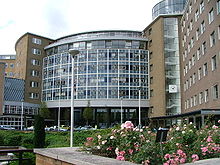
The Channel 4 building.
The UK now has a large number of digital terrestrial channels including a further six from the BBC, five from ITV and three from Channel 4, and one from S4C which is solely in Welsh, among a variety of others.
The vast majority of digital cable television services are provided by Virgin Media with satellite television available from Freesat or British Sky Broadcasting and free-to-air digital terrestrial television by Freeview. The entire UK will switch to digital by 2012.
Radio in the UK is dominated by BBC Radio, which operates ten national networks and over forty local radio stations. The most popular radio station, by number of listeners, is BBC Radio 2, closely followed by BBC Radio 1. There are hundreds of mainly local commercial radio stations across the country offering a variety of music or talk formats.
Internet
Main article: Internet in the United Kingdom
The Internet country code top-level domain (ccTLD) for the United Kingdom is .uk. The most popular ".uk" website is the British version of Google, followed by online BBC.
Main article: List of newspapers in the United Kingdom
Traditionally, British newspapers could be split into quality, serious-minded newspaper (usually referred to as "broadsheets" because of their large size) and the more populist, tabloid varieties. For convenience of reading, many traditional broadsheets have switched to a more compact-sized format, traditionally used by tabloids. The Sun has the highest circulation of any daily newspaper in the UK: 3.1 million, approximately a quarter of the market. Its sister paper, the News of the World has the highest circulation in the Sunday newspaper market, and traditionally focuses on celebrity-led stories.[253] The Daily Telegraph, a centre-right broadsheet paper, is the highest-selling of the "quality" newspapers.[252] The Guardian is a more liberal "quality" broadsheet and the Financial Times is the main business newspaper, printed on distinctive salmon-pink broadsheet paper.
First printed in 1737, The News Letter from Belfast, is the oldest known English-language daily newspaper still in publication today. One of its fellow Northern Irish competitors, The Irish News, has been twice ranked as the best regional newspaper in the United Kingdom, in 2006 and 2007.
Aside from newspapers, British magazines and journals have achieved worldwide circulation including The Economist and Nature.
Scotland has a distinct tradition of newspaper readership (see list of newspapers in Scotland). The tabloid Daily Record has the highest circulation of any daily newspaper outselling The Scottish Sun by four to one while its sister paper, the Sunday Mail similarly leads the Sunday newspaper market. The leading "quality" daily newspaper in Scotland is The Herald, though it is the sister paper of The Scotsman, the Scotland on Sunday, that leads in the Sunday newspaper market.
Music
Main article: Music of the United Kingdom
See also: British rock

The Beatles are one of the most commercially successful and critically acclaimed bands in the history of music, selling over a billion records internationally.
Various styles of music are popular in the UK, from the indigenous folk music of England, Northern Ireland, Scotland and Wales, to heavy metal.
Notable composers of classical music from the United Kingdom and the countries that preceded it include William Byrd, Henry Purcell, Sir Edward Elgar, Gustav Holst, Sir Arthur Sullivan (most famous for working with librettist Sir W. S. Gilbert), Ralph Vaughan Williams, and Benjamin Britten, pioneer of modern British opera. Sir Peter Maxwell Davies is one of the foremost living composers and current Master of the Queen's Music. The UK is also home to world-renowned symphonic orchestras and choruses such as the BBC Symphony Orchestra and the London Symphony Chorus. Notable conductors include Sir Simon Rattle, John Barbirolli and Sir Malcolm Sargent. Some of the notable film score composers include John Barry, Clint Mansell, Mike Oldfield, John Powell, Craig Armstrong, David Arnold, John Murphy, Monty Norman and Harry Gregson-Williams. George Frideric Handel, although born German, was a naturalised British citizen and some of his best works, such as Messiah, were written in the English language.
Prominent British contributors to have influenced popular music over the last 50 years include The Beatles, Queen, Cliff Richard, Elton John, Led Zeppelin, Pink Floyd and The Rolling Stones, all of whom have world wide record sales of 200 million or more. The Beatles have international record sales of more than one billion.[256][257][258] According to research by Guinness World Records, eight of the ten acts with the most UK chart singles are British: Status Quo, Queen, The Rolling Stones, UB40, Depeche Mode, the Bee Gees, the Pet Shop Boys and the Manic Street Preachers.
A number of UK cities are known for their music scenes. Acts from Liverpool have had more UK chart number one hit singles (54) per capita than any other city worldwide. Glasgow's contribution to the music scene was recognised in 2008 when it was named a UNESCO City of Music, one of only three cities in the world to have this honour.
Philosophy
The United Kingdom is famous for the tradition of "British Empiricism", a branch of the philosophy of knowledge that states that only knowledge verified by experience is valid, and "Scottish Philosophy", sometimes referred to as the ‘Scottish School of Common Sense’. The most famous philosophers of British Empiricism are John Locke, George Berkeley and David Hume, while Dugald Stewart, Thomas Reid and William Hamilton were major exponents of the Scottish “common sense” school. Britain is also notable for a theory of moral philosophy, Utilitarianism, first used by Jeremy Bentham and later by John Stuart Mill, in his short work Utilitarianism.
Other eminent philosophers from the UK and the states that preceded it include Duns Scotus, John Lilburne, Mary Wollstonecraft, Sir Francis Bacon, Adam Smith, Thomas Hobbes, William of Ockham, Bertrand Russell and Alfred Jules Ayer. Foreign-born philosophers who settled in the UK include Isaiah Berlin, Karl Marx, Karl Popper, and Ludwig Wittgenstein.
Science, engineering and innovation

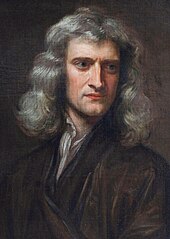
Sir Isaac Newton

The United Kingdom led the industrial revolution and has produced scientists and engineers credited with important advances, including;
- The laws of motion and illumination of gravity, by English physicist, mathematician, astronomer, natural philosopher, alchemist and theologian, Sir Isaac Newton
- The unification of electromagnetism, by James Clerk Maxwell
- The discovery of hydrogen, by Henry Cavendish
- The steam locomotive, by Richard Trevithick and Andrew Vivian
- The theory of aerodynamics, by Sir George Cayley
- The world's first working television system, and colour television, by Scottish engineer and inventor John Logie Baird.
- The invention of the jet engine, by Frank Whittle
- Evolution by natural selection, by Charles Darwin
- The Turing machine, by Alan Turing, the basis of the modern computer
- The invention of the hovercraft, by Christopher Cockerell
- The electric motor, by Michael Faraday, who largely made electricity viable for use in technology
- First practical telephone, by Scottish inventor Alexander Graham Bell.[273]
- The structure of DNA, by Francis Crick and others
- The invention of the World Wide Web, by Tim Berners-Lee
- The first commercial electrical telegraph, co-invented by Sir William Fothergill Cooke and Charles Wheatstone.
- The invention of the incandescent light bulb, by Joseph Swan
- The creation of postage and modern postal service, by Sir Rowland Hill
- The discovery of penicillin, by Scottish biologist and pharmacologist, Sir Alexander Fleming.
Notable civil engineering projects, whose pioneers included Isambard Kingdom Brunel, contributed to the world's first national railway transport system. Other advances pioneered in the UK include the marine chronometer, the jet engine, modern bicycle, electric lighting, steam turbine, electromagnet, stereo sound, motion picture, the screw propeller, the internal combustion engine, military radar, electronic computer, aeronautics, soda water, ivf, nursing, antiseptic surgery, vaccination, antibiotics.
Scientific journals produced in the UK include Nature, the British Medical Journal and The Lancet. In 2006, it was reported that the UK provided 9 percent of the world's scientific research papers and a 12 per cent share of citations, the second highest in the world after the US.
Visual art
Main article: Art of the United Kingdom
The Royal Academy is located in London. Other major schools of art include the Slade School of Fine Art; the six-school University of the Arts London, which includes the Central Saint Martins College of Art and Design and Chelsea College of Art and Design; the Glasgow School of Art, and Goldsmiths, University of London. This commercial venture is one of Britain's foremost visual arts organisations. Major British artists include Sir Joshua Reynolds, Thomas Gainsborough, John Constable, William Blake, J. M. W. Turner, William Morris, L. S. Lowry, Francis Bacon, Lucian Freud, David Hockney, Gilbert and George, Richard Hamilton, Peter Blake, Howard Hodgkin, Antony Gormley, and Anish Kapoor.
During the late 1980s and 1990s, the Saatchi Gallery in London brought to public attention a group of multigenre artists who would become known as the Young British Artists. Damien Hirst, Chris Ofili, Rachel Whiteread, Tracey Emin, Mark Wallinger, Steve McQueen, Sam Taylor-Wood, and the Chapman Brothers are among the better known members of this loosely affiliated movement.
Symbols

The flag of the United Kingdom is the Union Flag. It was created by the superimposition of the Flag of England, the Flag of Scotland and Saint Patrick's Flag in 1801. Wales is not represented in the Union Flag as Wales had been conquered and annexed to England prior to the formation of the United Kingdom. However, the possibility of redesigning the Union Flag to include representation of Wales has not been completely ruled out. The national anthem of the United Kingdom is "God Save the King", with "King" replaced with "Queen" in the lyrics whenever the monarch is a woman.
Britannia is a national personification of the United Kingdom, originating from Roman Britain. Britannia is symbolised as a young woman with brown or golden hair, wearing a Corinthian helmet and white robes. She holds Poseidon's three-pronged trident and a shield, bearing the Union Flag. Sometimes she is depicted as riding the back of a lion. At and since the height of the British Empire, Britannia has often associated with maritime dominance, as in the patriotic song Rule, Britannia!. The lion symbol is depicted behind Britannia on the British fifty pence coin and one is shown crowned on the back of the British ten pence coin. It is also used as a symbol on the non-ceremonial flag of the British Army. The bulldog is sometimes used as a symbol of the United Kingdom and has been associated with Winston Churchill's defiance of Nazi Germany.
Jumat, 05 Maret 2010
England
Nama Kelompok :
England is a country that is part of the United Kingdom. It shares land borders with Scotland to the north and Wales to the west; the Irish Sea is to the north west, the Celtic Sea to the south west and the North Sea to the east, with the English Channel to the south separating it from continental Europe. Most of England comprises the central and southern part of the island of Great Britain in the North Atlantic. The country also includes over 100 smaller islands such as the Isles of Scilly and the Isle of Wight.

Royal Standard of England’s flag


- Afrigustiana // 10608152
- Fika Falaina // 10608044
- Riyanti Saragih // 10608102
- Reza Destri Ardhika //10608096
- Wahyu Dityo Wandaru // 10608123
- Yusuf Iskandar Pratama // 10608167
England is a country that is part of the United Kingdom. It shares land borders with Scotland to the north and Wales to the west; the Irish Sea is to the north west, the Celtic Sea to the south west and the North Sea to the east, with the English Channel to the south separating it from continental Europe. Most of England comprises the central and southern part of the island of Great Britain in the North Atlantic. The country also includes over 100 smaller islands such as the Isles of Scilly and the Isle of Wight.
The area now called England has been settled by people of various cultures for about 35,000 years, but it takes its name from the Angles, one of the Germanic tribes who settled during the 5th and 6th centuries. England became a unified state in AD 927, and since the Age of Discovery, which began during the 15th century, has had a significant cultural and legal impact on the wider world. The English language, the Anglican Church, and English law—the basis for the common law legal systems of many other countries around the world—developed in England, and the country's parliamentary system of government has been widely adopted by other nations. The Industrial Revolution began in 18th-century England, transforming its society into the world's first industrialised nation. England's Royal Society laid the foundations of modern experimental science.
England's terrain mostly comprises low hills and plains, especially in central and southern England. However, there are uplands in the north (for example, the mountainous Lake District, Pennines, and Yorkshire Dales) and in the south west (for example, Dartmoor and the Cotswolds). London, England's capital, is the largest metropolitan area in the United Kingdom and the largest urban zone in the European Union by most measures. England's population is about 51 million, around 84% of the population of the United Kingdom, and is largely concentrated in London, the South East and conurbations in the Midlands, the North West, the North East and Yorkshire, which developed as major industrial regions during the 19th century. Meadowlands and pastures are found beyond the major cities.
The Kingdom of England—which after 1284 included Wales—was a sovereign state until 1 May 1707, when the Acts of Union put into effect the terms agreed in the Treaty of Union the previous year, resulting in a political union with the Kingdom of Scotland to create the new Kingdom of Great Britain. In 1800, Great Britain was united with Ireland through another Act of Union to become the United Kingdom of Great Britain and Ireland. In 1922 the Irish Free State was established as a separate dominion, but the Royal and Parliamentary Titles Act in 1927 reincorporated into the kingdom six Irish counties to officially create the current United Kingdom of Great Britain and Northern Ireland.
Flag of England
1. St. George ‘s Cross

The Flag of England is the St George's Cross. The red cross appeared as an emblem of England during the Middle Ages and the Crusades and is one of the earliest known emblems representing England. It achieved status as the national flag of England during the sixteenth century.
Saint George became the patron saint of England in the thirteenth century, and the legend of Saint George slaying a dragon dates from the twelfth century.
At the beginning of the Crusades, a red cross on white was already associated with England because this was St George's cross, the emblem associated with England's patron saint. Although the Pope decided English crusaders would be distinguished by wearing a white cross on red, and French crusaders a red cross on white (Italian knights were allocated a yellow cross on a white background), English knights soon decided to claim "their" cross of red on white, like the French. In January 1188, in a meeting between Henry II of England and Philip II of France, the two rivals agreed to exchange flags (France later changed its new white cross on red for a white cross on a dark blue flag). Some French knights carried on using the red cross however, and as English knights wore this pattern as well, the red cross on white became the typical crusader symbol regardless of nationality.
The flag appeared during the Middle Ages. The St George's Cross was used as an emblem (but not as a flag) of England was in a roll of account relating to the Welsh War of 1275. The English royalist forces at the Battle of Evesham in 1265 used a red cross on their uniforms, to distinguish themselves from the white crosses used by the rebel barons at the Battle of Lewes a year earlier.
The use of a red cross on a white background was a symbol of St. George in the Middle Ages. This is seen, for example, in the flag of Georgia, another country with Saint George as their patron saint. St George's cross may not have achieved the full status of national flag until the sixteenth century, when all other saints' banners were abandoned during the Reformation. Thereafter it became recognised as the flag of England and Wales. The earliest record of St George's Cross at sea, as an English flag in conjunction with royal banners but no other saintly flags, was 1545.
There is a theory that the flag is that the flag of Genoa was adopted by England and the City of London in 1190 for their ships entering the Mediterranean to benefit from the protection of the powerful Genoese fleet. This theory is untrue, since the King of France had already recognised the red cross on white as an English symbol.
2. Three Lions of England

Royal Standard of England’s flag
The Royal Standard of England, also known as the Three Lions, in favour during Tudor times, was a narrow, tapering swallow-tailed flag, of considerable length, used mainly for pageants. English Standards had the cross of St. George at their head; then the heraldic device, badge or crest, with its motto. These did not bear the coat of arms. The royal standard changed frequently from reign to reign.
The Royal Standard of England had the motto: Dieu et mon droit, which is divided into two bands: Dieu et mon and Droyt.
Arms are displayed on banners. Royal Banners are often confused with Royal Standards. It is the Royal Banner which flies above the place where the sovereign is in residence. The royal banner carried a representation of the king's shield, which was more stable.
Since the Acts of Union 1707, which ended the Kingdom of England, there has been no royal standard nor banner for England.[citation needed] The Royal Standards of the United Kingdom are in fact banners of the arms.
The design displays three horizontally positioned identical gold lions facing out of the image towards the observer, with blue tongues and claws, on a deep red background. It is formally specified in heraldry as: Gules in pale three lions passant guardant or, which means:
- Gules = red.
- In pale = organized on a central vertical axis.
- Three lions = heraldic stylization of three lions.
- Passant = facing left (as viewed) body horizontal, three legs on the ground, the left front leg stretched forward, tail reflexed back over the body.
- Guardant = the face of the animal facing out to the observer.
- Or = gold.
3. Another Examples of England’s flags

The English version of the First Union Flag, 1606, used mostly in England and, from 1707, the flag of the Kingdom of Great Britain.

The Scottish version of the First Union Flag may have seen limited use in Scotland from 1606 to 1707, following the Union of the Crowns.

The Second Union Flag, 1801, incorporating Cross of Saint Patrick, following Union of Great Britain and Kingdom of Ireland.
History of England
The history of England began with the arrival of humans thousands of years ago. What is now England, within the United Kingdom, was inhabited by Neanderthals 230,000 years ago. However, continuous human habitation dates to around 11,000 years ago, at the end of the last glacial period. The region has numerous remains from the Mesolithic, Neolithic, and Bronze Age, such as Stonehenge and Avebury. In the Iron Age, England, like all of Britain south of the Firth of Forth, was inhabited by the Celtic people known as the Britons, but also by some Belgae tribes (e.g.Atrebates, Catuvellauni, Trinovantes). In 43 AD the Roman conquest of Britain began; the Romans maintained control of their province of Britannia through the 5th century.
The Roman departure opened the door for the Anglo-Saxon invasion, which is often regarded as the origin of England and the English people. The Anglo-Saxons, a collection of various Germanic peoples, established several kingdoms that became the primary powers in what is now England and parts of southern Scotland. They introduced the Old English language, which displaced the previous British language. The Anglo-Saxons warred with British successor states in Wales, Cornwall, and the Hen Ogledd (Old North; the Brythonic-speaking parts of northern England and southern Scotland), as well as with each other. Raids by the Vikings were frequent after about AD 800, and the Norsemen took control of large parts of what is now England. During this period several rulers attempted to unite the various Anglo-Saxon kingdoms, an effort that led to the emergence of the Kingdom of England by the 10th century.
In 1066, the Normans invaded and conquered England. There was much civil war and battles with other nations throughout the Middle Ages. The Kingdom of England was a sovereign state until the reign of Richard I who made it a vassal of the Holy Roman Empire in 1194. In 1212 during the reign of his brother John Lackland the Kingdom instead became a tribute-paying vassal of the Holy See until the fourteenth century when the Kingdom rejected the overlordship of the Holy See and re-established its sovereignty. During the Renaissance, England was ruled by the Tudors. England had conquered Wales in the 12th century and was then united with Scotland in the early 18th century to form the Kingdom of Great Britain. Following the Industrial Revolution, Great Britain ruled a worldwide Empire, the largest in the world. Following a process of decolonization in the 20th century the vast majority of the empire became independent; however, its cultural impact is widespread and deep in many countries of the present day.
Archaeological evidence indicates that what was later southern Britannia was colonised by humans long before the rest of the British Isles because of its more hospitable climate between and during the various glacial periods of the distant past. The Sweet Track in the Somerset Levels is the oldest timber trackway discovered in Northern Europe and among the oldest roads in the world, and was built in 3807 or 3806 BC.
The first historical mention of the region is from the Massaliote Periplus, a sailing manual for merchants thought to date to the 6th century BC, although cultural and trade links with the continent had existed for millennia prior to this. Pytheas of Massilia wrote of his trading journey to the island around 325 BC.
Later writers such as Pliny the Elder (quoting Timaeus) and Diodorus Siculus (probably drawing on Poseidonius) mention the tin trade from southern Britain, but there is little further historical detail of the people who lived there.
Tacitus wrote that there was no great difference in language between the people of southern Britannia and northern Gaul and noted that the various nations of Britons shared physical characteristics with their continental neighbours.
Julius Caesar invaded southern Britain in 55 and 54 BC and wrote in De Bello Gallico that the population of southern Britannia was extremely large and shared much in common with the Belgae of the Low Countries. Coin evidence and the work of later Roman historians have provided the names of some of the rulers of the disparate tribes and their machinations in what was Britannia. Until the Roman Conquest of Britain, Britain's British population was relatively stable, and by the time of Julius Caesar's first invasion, the British population of what was old Britain was speaking a Celtic language generally thought to be the forerunner of the modern Brythonic languages. After Julius Caesar abandoned Britain, it fell back into the hands of the Britons.
The Romans began their second conquest of Britain in 43 AD, during the reign of Claudius. They annexed the whole of what would become modern England and Wales over the next forty years and periodically extended their control over much of lowland Scotland.
In the wake of the breakdown of Roman rule in Britain around 410, present day England was progressively settled by Germanic groups. Collectively known as the Anglo-Saxons, these included Jutes from Jutland together with larger numbers of Saxons from northwestern Germany and Angles from what is now Schleswig-Holstein. Prior to those settlements some Frisians invaded southeastern Britain in the 250s.
They first invaded Britain in the mid 5th century, continuing for several decades. The Jutes appear to have been the principal group of settlers in Kent, the Isle of Wight and parts of coastal Hampshire, while the Saxons predominated in all other areas south of the Thames and in Essex and Middlesex, and the Angles in Norfolk, Suffolk, the Midlands and the north.
The population of Britain dramatically decreased after the Roman period. The reduction seems to have been caused mainly by plague and smallpox. It is known that the plague of Justinian entered the Mediterranean world in the 6th century and first arrived in the British Isles in 544 or 545, when it reached Ireland. The Annales Cambriae mention the death of Maelgwn Wledig, king of Gwynedd from that plague in 547.
In approximately 495, at the Battle of Mount Badon, Britons inflicted a severe defeat on an invading Anglo-Saxon army which halted the westward Anglo-Saxon advance for some decades. Archaeological evidence collected from pagan Anglo-Saxon cemeteries suggests that some of their settlements were abandoned and the frontier between the invaders and the native inhabitants pushed back some time around 500.
Anglo-Saxon expansion resumed in the sixth century, although the chronology of its progress is unclear. One of the few individual events which emerges with any clarity before the seventh century is the Battle of Deorham, in 577, a West Saxon victory which led to the capture of Cirencester, Gloucester and Bath, bringing the Anglo-Saxon advance to the Bristol Channel and dividing the Britons in the West Country from those in Wales. The Northumbrian victory at the Battle of Chester around 616 may have had a similar effect in dividing Wales from the Britons of Cumbria.
Gradual Saxon expansion through the West Country continued through the seventh, eighth and ninth centuries. Meanwhile, by the mid-seventh century the Angles had pushed the Britons back to the approximate borders of modern Wales in the west, the Tamar in the South west and expanded northward as far as the River Forth.
Christianisation of Anglo-Saxon England began around 600 AD, influenced by Celtic Christianity from the northwest and by the Roman Catholic Church from the southeast. Augustine, the first Archbishop of Canterbury, took office in 597. In 601, he baptised the first Christian Anglo-Saxon king, Aethelbert of Kent. The last pagan Anglo-Saxon king, Penda of Mercia, died in 655. The last pagan Jutish king, Arwald of the Isle of Wight was killed in 686. The Anglo-Saxon mission on the continent took off in the 8th century, leading to the Christianisation of practically all of the Frankish Empire by 800.
Throughout the 7th and 8th century power fluctuated between the larger kingdoms. Bede records Aethelbert of Kent as being dominant at the close of the 6th century, but power seems to have shifted northwards to the kingdom of Northumbria, which was formed from the amalgamation of Bernicia and Deira. Edwin of Northumbria probably held dominance over much of Britain, though Bede's Northumbrian bias should be kept in mind. Succession crises meant Northumbrian hegemony was not constant, and Mercia remained a very powerful kingdom, especially under Penda. Two defeats essentially ended Northumbrian dominance: the Battle of the Trent in 679 against Mercia, and Nechtanesmere in 685 against the Picts.
The so-called "Mercian Supremacy" dominated the 8th century, though it was not constant. Aethelbald and Offa, the two most powerful kings, achieved high status; indeed, Offa was considered the overlord of south Britain by Charlemagne. That Offa could summon the resources to build Offa's Dyke is testament to his power. However, a rising Wessex, and challenges from smaller kingdoms, kept Mercian power in check, and by the early 9th century the "Mercian Supremacy" was over.
This period has been described as the Heptarchy, though this term has now fallen out of academic use. The word arose on the basis that the seven kingdoms of Northumbria, Mercia, Kent, East Anglia, Essex, Sussex and Wessex were the main polities of south Britain. More recent scholarship has shown that other kingdoms were also politically important across this period: Hwicce, Magonsaete, Lindsey and Middle Anglia.
The first recorded Viking attack in Britain was in 793 at Lindisfarne monastery as given by the Anglo-Saxon Chronicle. However, by then the Vikings were almost certainly well established in Orkney and Shetland, and it is probable that many other non-recorded raids occurred before this. Records do show the first Viking attack on Iona taking place in 794. The arrival of the Vikings, in particular the Danish Great Heathen Army, upset the political and social geography of Britain and Ireland. Alfred the Great's victory at Edington in 878 stemmed the Danish attack; however, by then Northumbria had devolved into Bernicia and a Viking kingdom, Mercia had been split down the middle, and East Anglia ceased to exist as an Anglo-Saxon polity. The Vikings had similar effects on the various kingdoms of the Scots, Picts and (to a lesser extent) Welsh. Certainly in North Britain the Vikings were one reason behind the formation of the Kingdom of Alba, which eventually evolved into Scotland.
The conquest of Northumbria, north-western Mercia and East Anglia by the Danes led to widespread Danish settlement in these areas. In the early tenth century the Norwegian rulers of Dublin took over the Danish kingdom of York. Danish and Norwegian settlement made enough of an impact to leave significant traces in the English language; many fundamental words in modern English are derived from Old Norse, though of the 100 most used words in English the vast majority are Old English in origin. Similarly, many place-names in areas of Danish and Norwegian settlement have Scandinavian roots.
By the end of Alfred's reign in 899 he was the only remaining English king, having reduced Mercia to a dependency of Wessex, governed by his son-in-law Ealdorman Aethelred. Cornwall (Kernow) was subject to West Saxon dominance, and the Welsh kingdoms recognised Alfred as their overlord.
Alfred of Wessex died in 899 and was succeeded by his son Edward the Elder. Edward, and his brother-in-law Æthelred of (what was left of) Mercia, began a programme of expansion, building forts and towns on an Alfredian model. On Æthelred's death his wife (Edward's sister) Æthelflæd ruled as "Lady of the Mercians" and continued expansion. It seems Edward had his son Æthelstan brought up in the Mercian court, and on Edward's death Athelstan succeeded to the Mercian kingdom, and, after some uncertainty, Wessex.
Æthelstan continued the expansion of his father and aunt and was the first king to achieve direct rulership of what we would now consider England. The titles attributed to him in charters and on coins suggest a still more widespread dominance. His expansion aroused ill-feeling among the other kingdoms of Britain, and he defeated a combined Scottish-Viking army at the Battle of Brunanburh. However, the unification of England was not a certainty. Under Æthelstan's successors Edmund and Eadred the English kings repeatedly lost and regained control of Northumbria. Nevertheless, Edgar, who ruled the same expanse as Athelstan, consolidated the kingdom, which remained united thereafter.
There were renewed Scandinavian attacks on England at the end of the 10th century. Æthelred ruled a long reign but ultimately lost his kingdom to Sweyn of Denmark, though he recovered it following the latter's death. However, Æthelred's son Edmund II Ironside died shortly afterwards, allowing Canute, Sweyn's son, to become king of England. Under his rule the kingdom became the centre of government for an empire which also included Denmark and Norway.
Canute was succeeded by his sons, but in 1042 the native dynasty was restored with the accession of Edward the Confessor. Edward's failure to produce an heir caused a furious conflict over the succession on his death in 1066. His struggles for power against Godwin, Earl of Wessex, the claims of Canute's Scandinavian successors, and the ambitions of the Normans whom Edward introduced to English politics to bolster his own position caused each to vie for control Edward's reign.
Harold Godwinson became king, in all likelihood appointed by Edward the Confessor on his deathbed and endorsed by the Witan. William of Normandy, Harald III of Norway (aided by Harold Godwin's estranged brother Tostig) and Sweyn II of Denmark all asserted claims to the throne. By far the strongest hereditary claim was that of Edgar the Atheling, but his youth and apparent lack of powerful supporters caused him to be passed over, and he did not play a major part in the struggles of 1066, though he was made king for a short time by the Witan after the death of Harold Godwinson.
In September 1066, Harald III of Norway landed in Northern England with a force of around 15,000 men and 300 longships (50 men in each boat). With him was Earl Tostig, who had promised him support. Harold Godwinson defeated and killed Harald III of Norway and Tostig and the Danish force at the Battle of Stamford Bridge.
On September 28, 1066, William of Normandy invaded England with a force of Normans, in a campaign known as the Norman Conquest. On October 14, after having marched his exhausted army all the way from Yorkshire, Harold fought the Normans at the Battle of Hastings, where England's army was defeated and Harold was killed. Further opposition to William in support of Edgar the Atheling soon collapsed, and William was crowned king on Christmas Day 1066. For the next five years he faced a series of English rebellions in various parts of the country and a half-hearted Danish invasion, but he was able to subdue all resistance and establish an enduring regime.
The Norman Conquest led to a sea-change in the history of the English state. William ordered the compilation of the Domesday Book, a survey of the entire population and their lands and property for tax purposes, which reveals that within twenty years of the conquest the English ruling class had been almost entirely dispossessed and replaced by Norman landholders, who also monopolised all senior positions in the government and the Church. William and his nobles spoke and conducted court in Norman French, in England as well as in Normandy. The use of the Anglo-Norman language by the aristocracy endured for centuries and left an indelible mark in the development of modern English.
The English Middle Ages were characterised by civil war, international war, occasional insurrection, and widespread political intrigue amongst the aristocratic and monarchic elite. England was more than self-sufficient in cereals, dairy products, beef and mutton. The nation's international economy was based on the wool trade, in which the produce of the sheepwalks of northern England was exported to the textile cities of Flanders, where it was worked into cloth. Medieval foreign policy was as much shaped by relations with the Flemish textile industry as it was by dynastic adventures in western France. An English textile industry was established in the fifteenth century, providing the basis for rapid English capital accumulation.
Henry I, the fourth son of William I the Conqueror, succeeded his elder brother William II as King of England in 1100. Henry was also known as "Henry Beauclerc" (because of his education—as his older brother William was the heir apparent and thus given the practical training to be king, Henry received the alternate, formal education), worked hard to reform and stabilise the country and smooth the differences between the Anglo-Saxon and Anglo-Norman societies. The loss of his son, William Adelin, in the wreck of the White Ship in November 1120, undermined his reforms. This problem regarding succession cast a long shadow over English history.
During the confused and contested reign of Stephen, there was a major swing in the balance of power towards the feudal barons, as civil war and lawlessness broke out. In trying to appease Scottish and Welsh raiders, he handed over large tracts of land. His conflicts with his cousin The Empress Matilda (also known as Empress Maud), led to a civil war from 1139-1153 known as the Anarchy. Matilda’s father, Henry I, had required the leading barons, ecclesiastics and officials in Normandy and England, to take an oath to accept Matilda as his heir. England was far less than enthusiastic to accept an outsider, and a woman, as their ruler.
There is some evidence suggesting Henry was unsure of his own hopes and the oath to make Matilda his heir. In likelihood, Henry probably hoped Matilda would have a son and step aside as Queen Mother, making her son the next heir. Upon Henry’s death, the Norman and English barons ignored Matilda’s claim to the throne, and thus through a series of decisions, Stephen, Henry’s favourite nephew, was welcomed by many in England and Normandy as their new ruler.
On 22 December 1135, Stephen was anointed king with the implicit support of the church and nation. Matilda and her own son stood for direct descent by heredity from Henry I, and she bided her time in France. In the autumn of 1139, she invaded England with her illegitimate half-brother Robert of Gloucester. Her husband, Geoffroy V of Anjou, conquered Normandy but did not cross the channel to help his wife, satisfied with Normandy and Anjou. During this breakdown of central authority, the nobles ran amuck building adulterine castles (i.e. castles erected without government permission).
Stephen was captured, and his government fell. Matilda was proclaimed queen but was soon at odds with her subjects and was expelled from London. The period of insurrection and civil war that followed continued until 1148, when Matilda returned to France. Stephen effectively reigned unopposed until his death in 1154, although his hold on the throne was still uneasy. As soon as he regained power, he began the process of demolishing the adulterine castles, which were hated by the peasants due to their being employed as forced labor to build and maintain them. Stephen kept a few castles standing however, which put him at odds with his heir.
England National Football Team

The England National Football Team’s Emblem Crest: The Three Lions
The England national football team represents England in international association football and is controlled by the Football Association, the governing body for football in England. Although most national teams worldwide represent a sovereign state, the four Home Nations which form the United Kingdom are each represented separately in international tournaments. England's home ground is Wembley Stadium in London and their head coach is Fabio Capello.
England are one of seven national teams to have won the FIFA World Cup, which they did in 1966 when they hosted the finals. They defeated West Germany 4–2 in extra time in the final. Since then their best performance at a World Cup was reaching the semi-finals in 1990, where they lost to West Germany on penalties. They reached the semi-finals of the UEFA European Championship in 1968 and 1996. They were the most successful of the home nations in the British Home Championship with 54 wins (including 20 shared wins) before the competition was suspended in 1984. They remain a prominent team on the global stage, rarely dropping outside of the top ten on both the FIFA and Elo rankings.
Traditionally, England's greatest rivals have been Scotland, who were their opponents in the first-ever international football match in 1870. Rivalries with other countries have become more prominent since regular fixtures against Scotland came to an end in the late 1980s. Matches against Argentina and Germany have produced particularly eventful encounters.
For EURO 2004, England came top of their qualification group. During the campaign, teenage striker Wayne Rooney was installed as a new star in England's attack, with much expected of him for the finals. His emergence was tempered by the loss of defender Rio Ferdinand, who was given an eight month ban from football at the beginning of 2004 after missing a drugs test, meaning he was unable to play in Portugal. In England's match against France, Frank Lampard scored a first half goal and England looked as if they would win the match, however France scored twice within the last three minutes of the game. Had David Beckham not missed a penalty, England would have entered the knock-out stages undefeated. England progressed with Rooney scoring in games against Switzerland and Croatia. Although favoured to do well in the quarter-finals, England's challenge was greatly affected early in the game when Rooney suffered a broken metatarsal in his foot. Sol Campbell scored a goal which was disallowed and England eventually lost in another penalty shootout to Portugal, after a 2-2 draw. Beckham and Darius Vassell missed their penalties. Michael Owen's goal during the game made him the first England player to score in four consecutive tournaments.
2005 saw Eriksson receive heavy criticism from fans for his defensive strategies and alleged lack of passion, his lack of communication with the players from the bench, and a perceived inability to change tactics when necessary in a game, as witnessed against Brazil in 2002. A 4-1 loss to Denmark in a friendly was followed by a humiliating 1-0 defeat to Northern Ireland in a 2006 World Cup qualifier, David Healy scoring the goal in the 73rd minute, which despite a previously excellent qualifying record led to further criticism. An unconvincing 1-0 victory over Austria did nothing to relieve the pressure. However, despite these criticisms England qualified for the World Cup finals with one match to spare, and travelled to Germany as group winners following a 2-1 victory and a much improved performance against Poland.
Despite this, following revelations made in the News of the World during January 2006, the Football Association decided to come to an agreement with Eriksson over his future and on 23 January 2006, it was announced that Eriksson was to stand down after the 2006 World Cup Finals. A number of possible successors were linked with the job; after a series of interviews that was widely criticized for its length, Portuguese national team manager Luiz Felipe Scolari was allegedly offered the job, but declined due to the belief that accepting the offer before a World Cup would conflict with his managerial duties for Portugal. On 4 May 2006, it was announced that Steve McClaren would succeed Eriksson after the World Cup. His first game in charge would be against Greece at Old Trafford on 16 August.
England's 2006 World Cup campaign saw them drawn into Group B alongside Paraguay, Trinidad and Tobago and Sweden. Their opening match of the tournament was against Paraguay in the Waldstadion in Frankfurt on 10 June 2006. The only goal of the game came after 2 minutes and 44 seconds, when a David Beckham free kick was headed in by Paraguayan defender Carlos Gamarra.
The 1-0 win over Paraguay was followed by a 2-0 victory over Trinidad and Tobago on 15 June 2006 in the Nuremberg. The deadlock was only broken in the 84th minute when England took the lead with a Peter Crouch header, and this was followed by a Steven Gerrard strike in injury time. The win secured England's place in the last 16. It also saw the return as a substitute of Wayne Rooney just six weeks after breaking a metatarsal bone in his foot.
England's final group match saw them play Sweden in Cologne. Rooney started the game, but his strike partner Michael Owen was stretchered off with a cruciate ligament injury after less than two minutes, but England still took a first half lead through a wonder strike from Joe Cole. Sweden equalised through Marcus Allbäck before Steven Gerrard gave England the lead again in the 86th minute. England, however, were denied a first win over Sweden since 1968 when Henrik Larsson levelled again in the 90th minute. Sol Campbell's introduction as a substitute made him the first England player to feature in the final stages of six consecutive tournaments, beginning with the 1996 European Championships.
England beat Ecuador in the last 16 on 25 June in Stuttgart courtesy of a David Beckham free-kick. Beckham duly became the first England player to score in three World Cup tournaments, having also found the net at the 1998 and 2002 competitions. The game also saw Rooney's full rehabilitation as he managed to play for the whole 90 minutes.
The quarter-final against Portugal on 1 July, ended 0-0 after extra time. David Beckham was substititued early in the second half with an ankle injury, and then Wayne Rooney was sent off for pushing Cristiano Ronaldo and stamping on Ricardo Carvalho's groin in a rough tackle, though Rooney later denied it was intentional.
The draw led to a penalty shoot-out that England lost 3-1, thus being eliminated from the tournament. Frank Lampard, Steven Gerrard and Jamie Carragher all had their attempts saved by keeper Ricardo, with Owen Hargreaves, later to be named man of the match, the only England player to score his penalty kick. It continued England's woes in penalty shootouts at major championships as well as Sven-Göran Eriksson's poor head-to-head record against Luiz Felipe Scolari. Thus, continuing the streak that England seem to never break. England have never won a penalty shoot-out in the World Cup.
The morning after England's exit, a tearful Beckham announced that he was stepping down as captain, although he stressed that he was keen to continue playing for England. In his last press conference prior to the flight home, Eriksson said he only wished to be remembered for being "honest", and a coach who "tried my best".
After World Cup 2006, Owen Hargreaves was voted England's "Player of The Tournament" by fans on theFA.com. Hargreaves was an unpopular choice for the squad prior to the competition but the World Cup proved a turning point, going from unpopular to fan favourite.
Steve McClaren was appointed England manager after the 2006 World Cup. He was not a popular choice with the media or fans and most said it was a panic choice and called the selection process of the new manager a shambles. He appointed John Terry as captain and chose not to recall David Beckham to the squad following the World Cup for almost a year. He also dropped Sol Campbell and David James, leaving Gary Neville and - from January 2007 - his brother Phil as the only players regularly involved in his first year in charge who were over the age of 30.
England started their UEFA Euro 2008 campaign well beating Andorra 5-0 and getting a hard fought 1-0 win over Macedonia in Skopje. But after this things started to go badly. England drew 0-0 at home with Macedonia and then suffered a humiliating defeat to Croatia away. The pressure on Steve McClaren was already starting to build and after a 6 month break from qualifiers England put in another lacklustre performance against Israel away. After this followed what some described as the worst match in England history. England played Andorra away and did win 3-0 but still it took them 60 minutes to break the deadlock and in the first half England barely threatened the part timers. There was a huge chorus of boos going into half time and unpopular England player had to be removed from the stands after getting so much abuse from England supporters due to his recent poor performances.
England played their first match at the new Wembley Stadium against Brazil on June 1, 2007 - a game for which Beckham was recalled after 11 months in the international wilderness and which heralded Michael Owen's return from his World Cup injury. In a qualifying game against Estonia five days later, Owen broke Gary Lineker's record for most goals in competitive internationals, which Lineker had held exclusively or jointly for 15 years.
The return to Wembley saw an upturn in form with England beating Israel, Russia and Estonia 3-0 each. After this England played Russia away a game which if they won they would qualify but lose and qualification would not be in their hands. England put in a very good display and took a first half lead through Wayne Rooney. But Russia went onto win 2-1. England were relying on Israel to beat Russia to be able to qualify and they did with an injury time winner.
All England had to do after this was get a draw against Croatia who had already qualified. McClaren had a weakened side out after injuries and suspensions to key players such as Michael Owen, Wayne Rooney and John Terry. Also Scott Carson was handed his competitive debut in goal and his mistake letting the ball go through his legs gave Croatia a 1-0 lead and shortly made it 2-0. but McClaren brought on David Beckham and this seemed to turn the game. Frank Lampard firstly converted a penalty and then Peter Crouch got onto the end of David Beckhams cross to equalise. And after the majority thought it was job done Croatia scored a third and won the game 3-2 resulting in Russia qualifying and England missing out on their first major tournament since the 1994 FIFA World Cup. After the game McClaren refused to resign as manager but the next day him and Terry Venables were sacked by the FA.
After McClaren's failure to reach the UEFA Euro 2008, The FA began a search for a new manager. On the 14 December 2007, Fabio Capello, former manager of AC Milan, Real Madrid, AS Roma and Juventus, was named as the new manager of England, the second foreign manager to take the post. Like his predecessor, his first major decision upon selecting a squad was to omit Beckham, leaving the former captain on 99 caps and prompting a media frenzy about whether he would ever reach the 100 mark. His first match was a friendly international 2-1 win against Switzerland on February 6, 2008. The England team enjoyed more success under Capello, with six wins, two draws and two defeats out of ten friendlies, as of September 2009. On top of this, they won all of their first eight matches in their 2010 FIFA World Cup qualifying campaign: for the first time, the team qualified for the World Cup with two qualifying games to spare.
Langganan:
Komentar (Atom)